What Makes 7v7 Football One of the Fastest-Growing Sports in the Game?
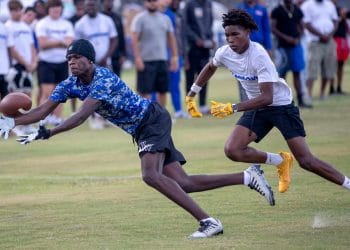
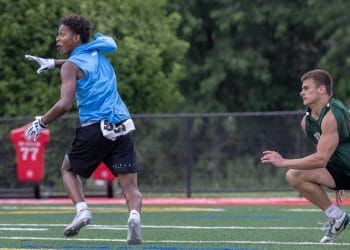
You want to see where the next wave of football stars are being built? It’s not just under the Friday night lights anymore—it’s out on the turf in the spring, no pads, just gloves, speed, and swagger.
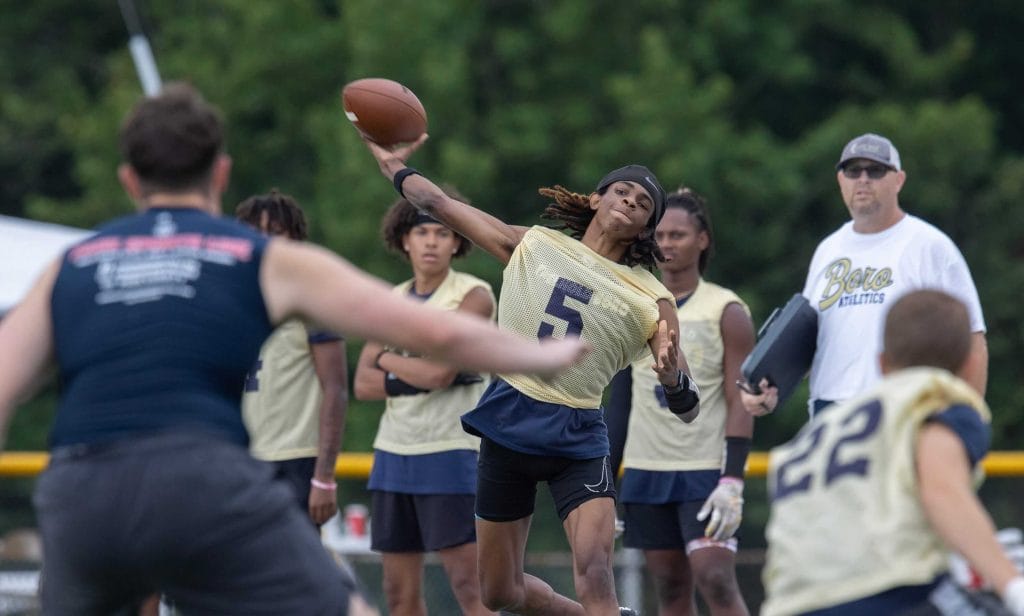
This is where QBs get their timing right. Where receivers sharpen routes like razors. Where DBs talk their talk and actually back it up. It’s fast, it’s competitive, and it’s changing the way football is played—and scouted.
Parents are asking about it. High school coaches are talking about it. College recruiters? They’re living in it.

This site uses affiliate links. We may earn a commission when you click at no cost to you.
So whether you’re new to the scene or already traveling tournament to tournament, here are 13 things you need to know about 7v7 football.
1. What Is 7v7 Football?
Let’s keep it 💯 — 7v7 football is the off-season proving ground for quarterbacks, receivers, and defensive backs. It’s a non-contact, fast-paced version of football built for reps, rhythm, and highlight reels.
There are no linemen. No tackling. No running the ball. It’s all about passing, catching, and covering. 
It’s usually played on a shorter field (40-50 yards) and designed to simulate passing situations. Think of it like a 2-minute drill… for the entire game.
The goal?
Sharpen timing, build chemistry, and give skill guys a live-action tune-up before the pads come back on in the fall.
If you’re a skill player with big-time dreams, 7v7 football isn’t optional anymore—it’s the new standard.
2. Is 7v7 Football the Same as Flag Football?
Nope. Not even close.
Let’s go ahead and squash that rumor like a busted coverage.
While both are non-contact and focus on skill positions, 7v7 football is way more competitive, way more organized, and way more tied into real football development. Flag football is great for teaching basics—7v7 is for ballers trying to get recruited.
In 7v7, there are no flags, no silly belts, and definitely no “stop-and-go” tempo. Instead, players wear soft-shell helmets, gloves, and team-issued uniforms. Quarterbacks are slinging darts. DBs are reading coverages. Receivers are breaking off defenders with pro-level footwork.
It’s basically a passing camp that turned into a full-on offseason arms race.
If flag is a backyard BBQ, 7v7 is Sunday dinner in the film room. Different vibe. Different stakes.
So when someone says “oh, it’s just flag football,” hit ‘em with a fade route and let the scoreboard talk.
3. How Does 7v7 Football Work?
It’s fast. It’s strategic. It’s pressure-packed. And it’s all about making plays in space.
Here’s how 7v7 football works:
-
One quarterback, no O-line, no D-line
-
Three to four wide receivers
-
One running back or slot option
-
Defense fields 2 corners, 2 safeties, and 2–3 linebackers or hybrid DBs
It’s pass-only — no handoffs, no run game. Quarterbacks have a 4-second play clock to get the ball out. Defenses earn points for stops, turnovers, and even deflections. Offenses rack up scores through touchdowns and completions.
Games are usually played on a 40-yard field, with first downs every 15 yards.
No hitting, but plenty of chirping.
Coaches are on the sideline, but this format puts the spotlight on player IQ, communication, and decision-making. Can your QB read a Cover 2 shell in three seconds? Can your corner break on a dig route before the ball’s out?
It’s football stripped to its core — just route concepts, timing, and execution.
4. What Positions Are in 7v7 Football?
No big men in the trenches. No fullbacks. No kicking game. This is football reimagined for the fastest, smoothest, most skilled dudes on the field.
Here’s who suits up in 7v7 football: 
🔵 Offense (7 players):
-
1 Quarterback (QB) – No rushing, just quick reads and dimes
-
1 Running Back (RB) – Think slot guy, check-down option
-
3–4 Wide Receivers (WRs) – Outside, slot, deep threats
-
1 Flex (TE/WR) – Extra weapon, often in motion or tight slot
🔴 Defense (7 players):
-
2 Cornerbacks (CBs) – Lock up the edges
-
2 Safeties (FS/SS) – Play deep, read QBs, erase mistakes
-
2–3 Linebackers or Nickel DBs – Cover the flats, spy, break up routes
No pass rush = coverage chess match.
No blocking = timing is everything.
If you’re not a skill guy, 7v7 ain’t your lane—but if you are, it’s your stage.

This site uses affiliate links. We may earn a commission when you click at no cost to you.
This format exposes weak footwork and celebrates elite instincts. You either make plays… or get exposed.
5. How Long Is a 7v7 Football Game?
Fast pace. Short clock. No time to overthink.
A typical 7v7 football game lasts about 20 to 25 minutes per half, depending on the tournament or league. Most games are played in two halves with a running clock, which means no stopping unless there’s a timeout or injury.
You’re looking at around 40–50 minutes total, start to finish. No halftime shows, no marching bands, just straight-up football.
Oh—and no overtime in most formats. If it’s tied?
Sudden death. First score wins.
It’s designed for reps, rhythm, and volume.
That means teams might play 3–5 games in a day, especially during tournaments.
Don’t blink. One missed assignment and you’re giving up six.
Think of it like a 2-minute drill… that never ends.
6. What Is the Field Size for 7v7 Football?
Smaller field, bigger plays.
Unlike the 100-yard grind of traditional football, 7v7 football is played on a condensed field that keeps the action tight and the tempo high.
Here’s the standard layout:
-
40 yards long (plus a 10-yard end zone)
-
Around 40 yards wide, give or take, depending on the event
-
First downs every 15 yards
-
No kicking game, no trenches — just space and speed
This tighter field means less time for QBs to make decisions, less room for DBs to recover, and more chances for big-time throws into tight windows.
Translation? You better be precise.
A route that works in open grass might get jumped here if the timing’s off by even half a second.
Also, most tournaments run multiple fields side-by-side on turf or grass, so it’s loud, chaotic, and loaded with eyeballs — including scouts.
This setup rewards IQ, anticipation, and quick-twitch movement. You ain’t hiding out here.
7. When Is 7v7 Football Season?
Welcome to football’s unofficial spring and summer league. 
This site uses affiliate links. We may earn a commission when you click at no cost to you.
While traditional football takes a break after the fall, 7v7 football heats up in the offseason. Most teams start forming and practicing in late winter (January–February), and the tournament season runs from March through July.
This schedule gives high school players a way to:
-
Stay sharp between seasons
-
Showcase their skills to recruiters
-
Build chemistry with teammates before fall camp
The biggest national tournaments — like Pylon, OT7, and Battle — go down during spring and summer weekends, often in indoor complexes, high school stadiums, or turf fields across the country.
No pads. No breaks. Just reps, reps, and more reps.
And for college scouts? This is prime evaluation time.
So if you’re asking, “When’s 7v7 football season?” —
It’s the moment pads come off… until fall camp comes calling
8. Is 7v7 a Replacement for High School Football?
Not even close.
7v7 football is a supplement, not a substitute.
It’s the offseason grind that makes the regular season shine. While 7v7 sharpens skills and builds confidence, it doesn’t replace the pads, the physicality, or the full-team structure of 11-on-11 high school football.
In fact, most 7v7 players are active starters for their high school teams. They use 7v7 to:
-
Get more route reps
-
Improve coverage reads
-
Build timing with teammates
-
Gain exposure at national tournaments
But don’t get it twisted — you still gotta strap up on Friday nights to earn those scholarships. College coaches want to see how you handle pressure, contact, and full-speed football.
Think of 7v7 like offseason film work… in real time.
It won’t win you a state title, but it can get you on the radar.
Bottom line:
You need both. One polishes your game, the other proves it.
9. How to Play 7v7 Football?
Quick decisions. Sharp routes. Locked-in coverage. 
That’s the name of the game in 7v7 football, and whether you’re a quarterback, wideout, or defensive back, the rules are simple — but the execution? That’s where the dogs get separated from the puppies.
🔵 On Offense:
-
The quarterback has 4 seconds to throw — no exceptions
-
No running plays — every snap is a pass
-
Teams get 3 downs to gain 15 yards (and score after 3 more)
-
A TD = 6 points, and you can go for a 1-point conversion from the 5-yard line
🔴 On Defense:
-
No blitzing — all coverage, all the time
-
Defenses can score points for stops, INTs, or turnovers on downs
-
It’s all about communication, recognition, and breaking on routes
No helmets flying. No pancake blocks. Just pure football IQ and skill.
7v7 is where you find out who’s got timing and who’s got excuses.
10. How to Start a 7v7 Football Team?
You don’t need boosters or big-time sponsors — just ballers, structure, and hustle.
Starting a 7v7 football team isn’t as complicated as people think. It takes planning, but if you’ve got players and a vision, you’re already halfway there.
🛠️ Step-by-step:
-
Lock in your roster
-
Focus on QBs, WRs, DBs, RBs, and LBs
-
Aim for 12–15 players max for flexibility and subs
-
-
Find a coach (or be one)
-
Someone who understands route trees, coverage shells, and can teach game IQ
-
-
Register for tournaments
-
Start local, then level up to Pylon, Battle, OT7, etc.
-
-
Get gear
-
Uniforms, flags (if needed), soft-shell helmets, cones, and a legit football
-
Optional but 🔥: team branding
-
-
Schedule practices
-
Focus on timing, spacing, and route execution
-
Pro Tip:
Create social media pages — recruiters check Instagram and Twitter to scout kids and teams before tourneys even start.
Bottom line? If you’ve got talent and structure, your team can go from local to elite in one season.
11. When Did 7v7 Football Start?
7v7 football didn’t just pop up overnight — it evolved.
The roots trace back to the early 1990s, when coaches across Texas started using 7-on-7 formats for offseason passing drills. At first, it was just a way to keep QBs and receivers sharp during spring and summer.
But once states like Texas and Florida built official high school 7v7 leagues, the movement exploded.
By the mid-2000s, it turned into a full-blown national circuit with:
-
Travel teams
-
Sponsors
-
Media coverage
-
College scouts on the sidelines
Today, 7v7 football is a key part of the recruiting ecosystem — especially for skill players trying to separate themselves early.
From backyard reps to national exposure, it’s grown fast and shows no signs of slowing down.
So when you ask “When did 7v7 start?” — know that you’re stepping into a tradition that’s 30+ years deep and still evolving every season.
12. Who Created 7v7 Football?
There’s no single name on the patent, but the blueprint came out of Texas.
Back in the early ’90s, high school coaches across the Lone Star State started organizing informal 7-on-7 scrimmages to keep their QBs, receivers, and DBs active in the offseason. It wasn’t about highlight reels or offers — it was about reps, rhythm, and real competition.
Then came the first organized leagues.
In 1998, Texas launched the State 7on7 Organization, turning those backyard games into structured, statewide tournaments. That sparked similar leagues in California, Florida, Georgia, and beyond.
Soon, private coaches and trainers started building travel teams, and just like that — 7v7 football became a national movement.
Today’s powerhouses?
Programs like South Florida Express, Ground Zero, Bootleggers, and DEFCON are carrying the torch.
So while there’s no single inventor, credit goes to the high school coaches who saw the need and built the foundation.
From Texas grass fields to ESPN coverage — this thing’s grown into a beast.
13. Why Is 7v7 Football So Popular Now?
Because the game is evolving — and 7v7 is leading the charge.
Colleges want playmakers. QBs with anticipation. DBs who can read leverage and break in real time. 7v7 football gives all of that — on repeat.
Here’s why it’s blowin’ up:
-
More exposure – Tournaments are filled with scouts, media, and cameras
-
More reps – QBs and WRs throw hundreds of passes in a weekend
-
Fewer injuries – No contact = more time to develop without getting banged up
-
Social media – One viral highlight can change your recruiting life
-
Year-round competition – You don’t wait till fall to prove you can ball
And let’s be real — kids love to compete. 
No pads, just cleats, gloves, and that “throw me the rock” mentality.
So yeah, 7v7 football is here to stay. And for skill players chasing scholarships, it’s not extra — it’s essential.
That’s the playbook, y’all.
If you’re a baller, a coach, a parent, or just a fan trying to keep up with the next wave — now you know why 7v7 football is changing the game.
Want more football breakdowns, player rankings, and team debates that actually start conversations?
👉 Subscribe to Sortie Sports and get content straight to your inbox before it hits the field.
No fluff. No filters. Just football.